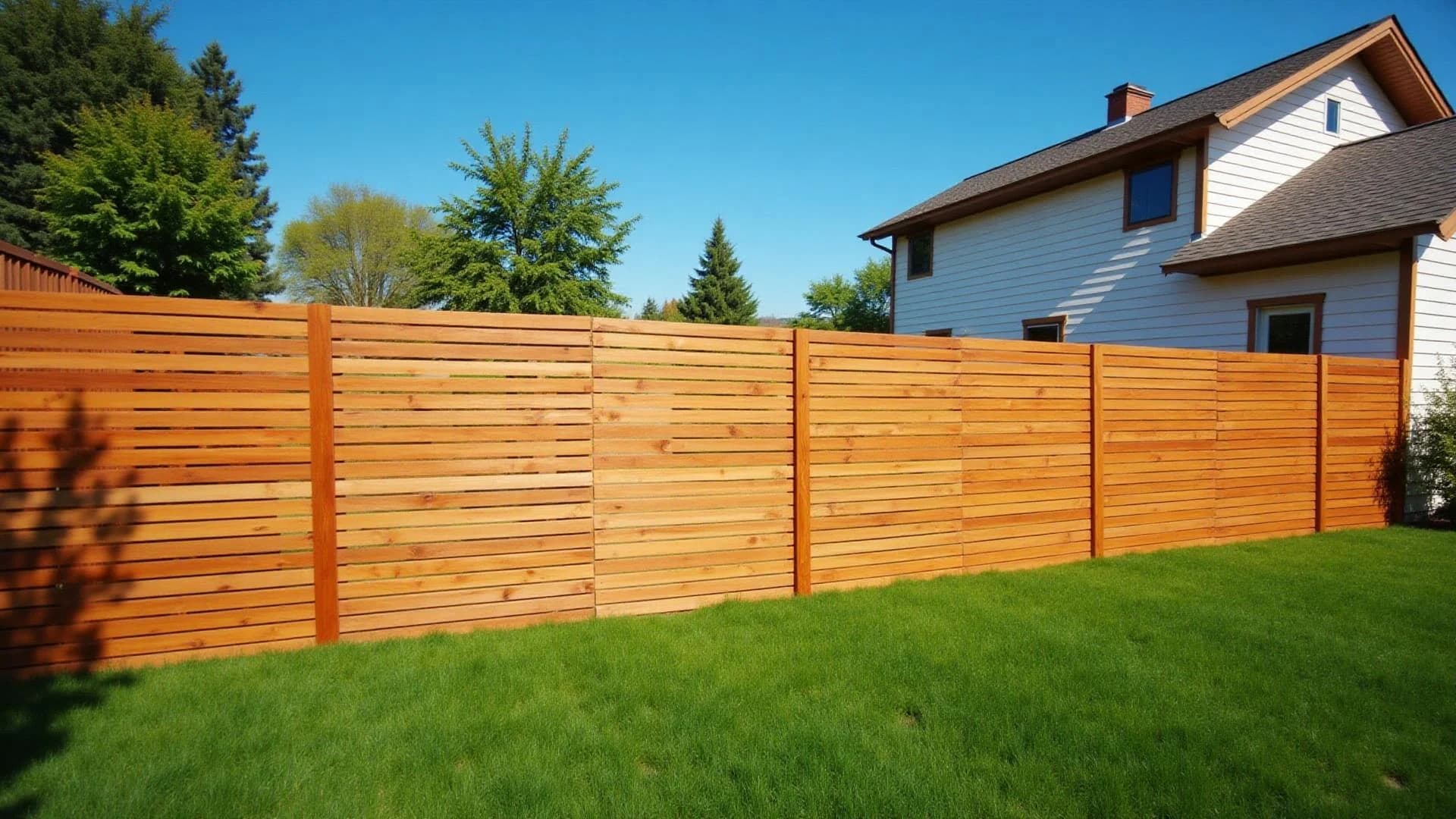
Privacy Fence Installation in Wilmington NC
Complete privacy and security with professional privacy fence installation for your home or business
Privacy Fence Options
Choose from our selection of high-quality privacy fence materials and designs
Vinyl Privacy Fence
Low-maintenance vinyl privacy fence with excellent durability and weather resistance.
- No painting or staining required
- Weather resistant
- Easy to clean and maintain
Wood Privacy Fence
Classic wood privacy fence with natural beauty and customizable design options.
- Natural wood appearance
- Customizable design
- Excellent privacy protection
Aluminum Privacy Fence
Modern aluminum privacy fence with sleek design and excellent durability.
- Modern, sleek appearance
- Corrosion resistant
- Low maintenance
Benefits of Privacy Fencing
Why privacy fencing is the perfect solution for your property
Privacy & Security
- Complete privacy from neighbors and street
- Enhanced security for your property
- Peaceful outdoor living space
- Protection from wind and noise
Property Value
- Increases property value
- Enhances curb appeal
- Defines property boundaries
- Creates outdoor living space
Privacy Fence Installation Process
Professional installation process for your privacy fence
Site Survey
We survey your property and discuss your privacy fence requirements
Design & Planning
Create a custom design and plan for your privacy fence installation
Permits & Approvals
Handle all necessary permits and HOA approvals for your project
Installation
Professional installation of your privacy fence with quality guarantee
Privacy Fence Material Options in Wilmington NC
Each material offers distinct advantages in terms of appearance, maintenance, lifespan, and cost -- here is how they compare for Wilmington's coastal climate
Wood Privacy Fencing
$15-25 per linear foot
Wood privacy fencing remains the most popular choice for Wilmington homeowners who want a natural, warm appearance at the lowest upfront cost. Pressure-treated southern yellow pine is the most affordable option, while western red cedar offers superior natural rot resistance and a richer color without chemical treatment. Wood fences can be stained in any color or left to weather to a natural silver-gray patina over time. The primary trade-off is maintenance: wood fences in Wilmington's humid climate require staining or sealing every 2-3 years to prevent moisture damage, warping, and premature decay. With proper care, a wood privacy fence lasts 15-25 years.
- Lowest upfront cost
- Natural, warm appearance
- Fully customizable stain colors
- 15-25 year lifespan with maintenance
- Requires staining/sealing every 2-3 years
Vinyl Privacy Fencing
$25-40 per linear foot
Vinyl privacy fencing is the top low-maintenance option for Wilmington homeowners. Vinyl will never rot, warp, crack, or require any painting, staining, or sealing throughout its entire lifespan. It stands up exceptionally well to Wilmington's humidity, salt air, and intense summer sun. Modern vinyl comes in a variety of colors and textures, including wood-grain finishes that closely resemble natural cedar or redwood. The higher upfront cost compared to wood pays for itself over time through zero maintenance expenses and a longer 25-30 year lifespan. Vinyl is also impervious to termites and other wood-boring insects that are common in the Cape Fear region.
- Zero maintenance required
- Will not rot, warp, or crack
- Termite and insect proof
- 25-30 year lifespan
- Multiple colors and wood-grain textures
Composite Privacy Fencing
$30-45 per linear foot
Composite privacy fencing combines recycled wood fibers and plastic polymers to deliver the authentic look and feel of natural wood with virtually zero maintenance requirements. Composite boards resist moisture absorption, insect damage, and UV fading far better than natural wood, and they never need staining, sealing, or painting. Many homeowners in Wilmington's upscale neighborhoods choose composite because it provides the warmth of wood without the upkeep. Composite fencing is also an eco-friendly choice, as most manufacturers use recycled materials in production. With a lifespan of 25 years or more, composite fencing offers exceptional long-term value despite the higher initial investment.
- Authentic wood look without maintenance
- Made from recycled materials
- Resistant to rot, insects, and UV
- 25+ year lifespan
- Eco-friendly construction
Privacy Fence Height Options and Wilmington Regulations
Choosing the right fence height depends on your privacy needs, local regulations, and HOA requirements -- here is what Wilmington homeowners need to know
The vast majority of privacy fences we install in Wilmington and the surrounding Cape Fear area are 6 feet tall, which is the standard height that provides full privacy for backyard spaces, pools, and outdoor living areas. At 6 feet, your fence blocks sight lines from neighboring properties and the street while meeting most HOA height restrictions without requiring a special variance. Six-foot privacy fencing is also tall enough to contain most dog breeds and creates an effective sound buffer between you and adjacent properties.
For properties that need extra screening, such as homes adjacent to busy roads like Market Street or College Road, lots bordering commercial properties, or properties with elevated neighboring terrain, we install 8-foot privacy fences. An 8-foot fence provides nearly complete visual screening even from second-story windows on adjacent properties. However, 8-foot fencing in Wilmington may require a building permit from New Hanover County, and many HOA communities cap fence height at 6 feet. Our team handles all permit research and HOA coordination to ensure your fence is fully compliant before we begin installation.
In the City of Wilmington, fence regulations vary by zone and placement. Front yard fences are typically limited to 4 feet in height, while side and rear yard fences can be up to 6 feet without special approval. Fences taller than 6 feet may require a zoning variance or building permit depending on the property's classification. Setback requirements also apply: most residential zones require fences to be set back at least 1-2 feet from the property line, though this varies by neighborhood. NC Fence Co. conducts a thorough review of your property's specific regulations during the initial site survey so there are no surprises during or after installation.
Height Comparison at a Glance
6-Foot Privacy Fence (Standard)
The most common height for residential privacy fencing. Provides full ground-level privacy, meets most HOA requirements, and typically does not require a permit in New Hanover County. Sufficient for containing most dog breeds.
8-Foot Privacy Fence (Maximum Privacy)
Maximum screening for high-traffic areas, commercial borders, and properties with elevated neighbors. May require a building permit and HOA variance. Costs approximately 25-30% more than 6-foot fencing due to additional materials and reinforced posts.
Wilmington Fence Regulations Summary
- Front yard fences: 4 feet maximum in most residential zones
- Side and rear yard fences: 6 feet without special permit
- Fences over 6 feet may require a zoning variance
- Setbacks of 1-2 feet from property line required in most zones
- Call 811 before digging to locate underground utilities
Visit our fence permits guide for complete details on Wilmington building codes and permit requirements.
Navigating HOA Approval for Your Privacy Fence
Many Wilmington neighborhoods have HOA guidelines that dictate fence specifications -- NC Fence Co. handles the entire approval process so you do not have to
A large percentage of residential properties in the Wilmington metro area are part of a homeowners association, including popular communities in Porters Neck, Scotts Hill, Monkey Junction, Ogden, and throughout Brunswick County. HOA covenants, conditions, and restrictions (CC&Rs) frequently include detailed specifications for fencing, covering everything from approved materials and colors to maximum heights, setback distances, and even the direction your fence's finished side must face.
Common HOA fence restrictions in the Wilmington area include requirements that fences be no taller than 6 feet, that they use only certain materials (many communities permit vinyl and wood but restrict chain link), and that the fence color be limited to natural tones like white, tan, or cedar. Some HOAs require the "good side" of the fence (the finished, flat side) to face outward toward neighbors and common areas. Others mandate specific setbacks from property lines, streets, and easements that go beyond the city's baseline requirements.
NC Fence Co. simplifies this process entirely. During your initial consultation, we review your community's CC&Rs and any supplemental architectural guidelines. We then design your privacy fence to meet every HOA specification and prepare a complete submission package, including a site plan, material specifications, color samples, and elevation drawings. We submit the package to your HOA's architectural review committee on your behalf and handle any follow-up questions or modification requests. Most HOA approvals take 2-4 weeks, and we schedule your installation to begin promptly after approval is granted. This turnkey approach means you never have to interpret confusing covenant language or navigate the approval bureaucracy yourself.
Common HOA Requirements
- Approved materials (typically wood, vinyl, or composite)
- Maximum height restrictions (usually 6 feet)
- Approved colors (natural tones and neutrals)
- Finished side facing outward
- Setback distances from property lines and easements
Our HOA Approval Process
- Review your CC&Rs and architectural guidelines
- Design fence to meet all HOA specifications
- Prepare complete submission package
- Submit to architectural review committee
- Handle follow-up and modification requests
Wind Load Ratings and Storm Performance for Coastal NC
Privacy fences face unique challenges in the Cape Fear region -- proper construction techniques make the difference between a fence that survives a storm and one that does not
Wilmington sits in one of the most hurricane-prone areas on the East Coast, and privacy fences bear the brunt of high winds because their solid panels act as a sail, catching wind rather than letting it pass through. Understanding how different construction methods handle wind loading is essential to getting a privacy fence that will last through the Cape Fear region's storm seasons.
Board-on-board construction is our most popular recommendation for Wilmington privacy fences that need enhanced wind resistance. In this design, fence boards are alternated on opposite sides of the horizontal rails, overlapping slightly in the center. This creates visual privacy from any angle while leaving narrow gaps between boards that allow wind to pass through the fence rather than pushing against a solid wall. During tropical storms, this airflow reduces the total wind load on posts and rails by 30-40% compared to a solid stockade panel.
Post spacing is another critical factor for coastal privacy fences. Standard fence construction uses 8-foot post spacing, which is adequate for inland areas with moderate wind exposure. For properties in Wilmington, Wrightsville Beach, Carolina Beach, and other coastal communities, we reduce post spacing to 6 feet. This shorter span means each section of fence has less surface area to catch wind, and the force is distributed across more posts, significantly reducing the chance of post failure during high winds.
Post depth and footings must also account for the Cape Fear region's sandy, often water-saturated soil. We set privacy fence posts a minimum of 36 inches deep with concrete footings, compared to the 24-inch minimum used in many inland installations. In areas with particularly loose or sandy soil, such as properties near Wrightsville Beach or along the Intracoastal Waterway, we may use 42-inch post depth or steel post anchors for additional stability.
Coastal Construction Standards
Board-on-Board Design
Alternating boards allow wind pass-through while maintaining full privacy. Reduces wind load by 30-40% compared to solid panels.
6-Foot Post Spacing
Tighter spacing distributes wind force across more posts, reducing stress per section. Standard inland spacing of 8 feet is not recommended for coastal properties.
36-Inch Post Depth
Deep concrete footings anchor posts securely in sandy coastal soil. Up to 42 inches for beachfront properties.
Steel Post Brackets
Available for high-exposure properties where additional post anchoring is needed beyond standard concrete footings.
Hurricane Preparation Tips
- Remove loose items near the fence that could become projectiles
- Trim overhanging tree branches that could fall on fence panels
- Inspect and tighten any loose hardware before storm season
- Ensure gate latches are secure so gates do not swing freely in wind
- For severe hurricanes (Cat 3+), consider removing a panel or two to reduce wind load
Privacy Fence Cost Breakdown in Wilmington NC
Transparent pricing by material and height -- use our fence cost calculator for a quick estimate or call for an exact quote
Wood Privacy (6ft)
$20-30 per linear foot
Pressure-treated pine or cedar privacy fencing at the standard 6-foot height, including all materials, posts, concrete footings, and professional installation. Cedar runs toward the higher end of this range due to premium material cost.
- Materials and installation included
- Treated pine or cedar options
- Concrete post footings
Vinyl Privacy (6ft)
$25-40 per linear foot
Premium vinyl privacy fencing at 6 feet, including tongue-and-groove panels, aluminum-reinforced posts and rails, concrete footings, and installation. Wood-grain textures and custom colors are at the higher end.
- Zero lifetime maintenance cost
- Aluminum-reinforced panels
- Manufacturer warranty included
Composite Privacy (6ft)
$30-45 per linear foot
Premium composite privacy fencing with natural wood appearance, recycled content, and zero maintenance requirements. Includes professional installation with reinforced posts and concrete footings.
- Authentic wood appearance
- Eco-friendly recycled materials
- 25+ year warranty
Additional Cost Factors
8-Foot Height Upgrade
Add approximately 25-30% to the per-foot price for any material. Includes taller posts, additional board material, and reinforced construction for the extra height.
Gates
Single walk gate: $200-400
Double drive gate: $400-600
Custom arched gate: $500+ depending on size
Typical Project Costs
Average backyard (150 lin ft, wood): $3,000-4,500
Average backyard (150 lin ft, vinyl): $3,750-6,000
Full perimeter (300 lin ft, wood): $6,000-9,000
Factors That Affect Price
Terrain slope, tree root removal, old fence demolition, number of corners, and gate count all influence the final installed price.
Every property is different. Call us for a free on-site estimate that accounts for your specific terrain, material choice, and layout requirements.
Privacy Fence Maintenance by Material
Maintenance requirements vary dramatically between wood, vinyl, and composite -- here is what to expect for each
Wood Fence Maintenance
Wood privacy fences in Wilmington's humid climate require the most ongoing attention of any fencing material. Without regular maintenance, wood will begin to show signs of weathering, graying, and potential rot within 1-2 years of installation.
Every 2-3 Years
Apply wood stain or sealant to all surfaces. Power wash before application to remove mildew and debris.
Annually
Inspect for rot at post bases, check for warped or loose boards, and look for insect damage. Replace damaged boards promptly.
Ongoing
Keep soil and mulch from piling up against fence boards to prevent ground-level rot. Trim vegetation away from fence.
Vinyl Fence Maintenance
Vinyl fencing requires the least maintenance of any privacy fence material. The non-porous surface does not absorb moisture, resists mildew growth, and never needs painting or sealing.
Twice a Year
Rinse with a garden hose to remove dirt and pollen. For stubborn spots, use mild soap and a soft cloth.
Annually
Check panels and posts for any impact damage from lawn equipment or fallen branches. Inspect gate hardware for smooth operation.
Never Needed
No painting, staining, sealing, or refinishing. No rot treatment. No insect prevention.
Composite Fence Maintenance
Composite fencing falls between vinyl and wood in terms of maintenance, though much closer to vinyl. The plastic polymer content makes composite boards resistant to moisture, rot, and insects.
Twice a Year
Hose down to remove surface dirt. For mildew in shaded areas, use a composite deck cleaner and soft brush.
Annually
Inspect hardware connections and check for any surface scratches. Most scratches can be buffed out with fine-grit sandpaper on capped composite.
Never Needed
No staining, sealing, or painting. No rot or insect treatment required.
Proudly Serving All Wilmington Fence Companies Needs In:
We're proud to be among the most trusted fence companies in Wilmington NC, serving homeowners and businesses throughout New Hanover County and surrounding areas.
Primary Service Areas
Our service area extends 30 miles from downtown Wilmington, ensuring we can meet the fencing needs of communities throughout the Cape Fear region.
All Service Areas
Browse all locations we serve
Wilmington NC
Main service hub - All zip codes
Wrightsville Beach
Coastal fence specialists
Leland NC
Suburban & HOA communities
Oak Island
Beach community & vacation homes
Hampstead NC
Coastal and affluent residential
Serving fence customers throughout southeastern North Carolina. Read our complete guide to North Carolina fence companies for statewide insights and information.